Morphological Operations
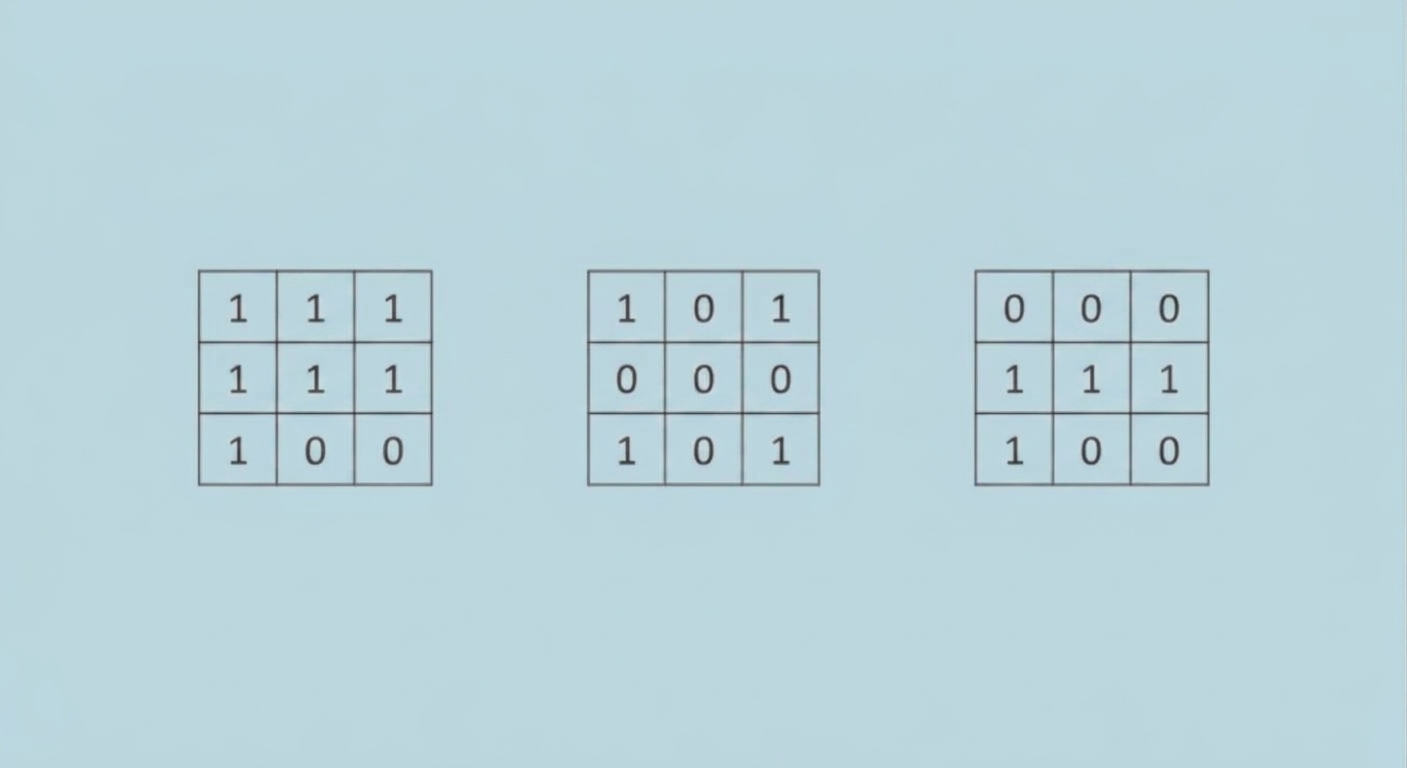
Have you ever wondered why some segmentation results look clean and refined, while others contain scattered pixels, small gaps, or irregular boundaries? The difference is not always the segmentation model itself. Post-processing can play an important role in refining the output of a segmentation model. One commonly used approach is morphological image processing.
Morphological operations are image-processing techniques used to analyse and modify the shape, size, and structure of objects in an image. They are particularly useful for cleaning binary segmentation masks by removing unwanted artefacts, filling small gaps, connecting broken regions, and refining object boundaries. Unlike traditional filtering methods that mainly focus on pixel intensity values, morphological operations use a structuring element, or kernel, to examine the spatial relationship between neighbouring pixels. In this blog, we will look at some of the most common morphological operations and how they can be used to clean and refine image segmentation results.
Morphological Operations Components
Morphological operations mainly involve two components:
Input image
The input is often a binary image containing:
- Foreground/object of interest — usually represented by white pixels(1)
- Background — usually represented by black pixels(0)
Structuring Element (Kernel)
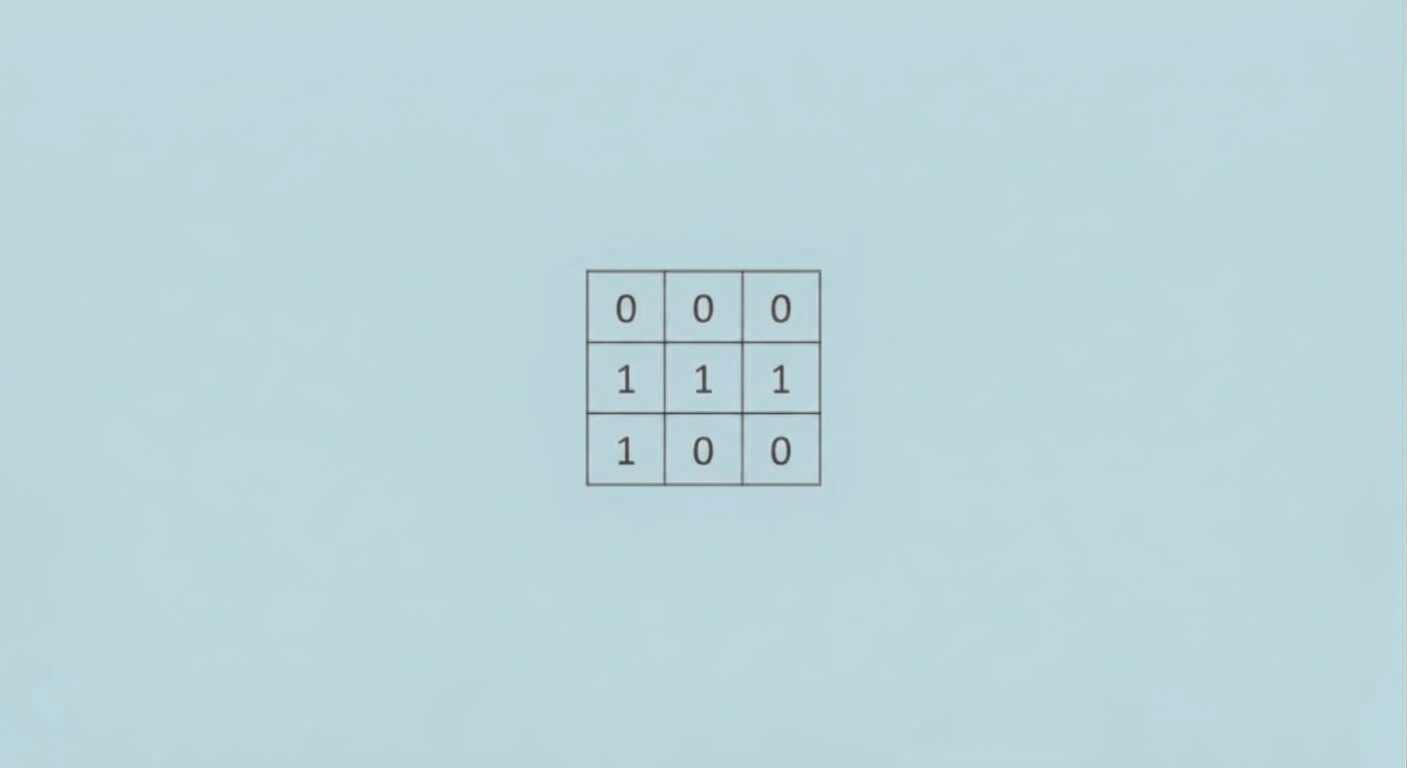
A structuring element is a small matrix that defines the neighbourhood over which the operation is performed. Common shapes include: square, rectangle, cross and ellipse. The size and shape of the kernel influence how much the image is modified.
Morphological Operations
The two fundamental morphological operations are erosion and dilation. More complex operations, such as opening and closing, are built by combining them.
Erosion
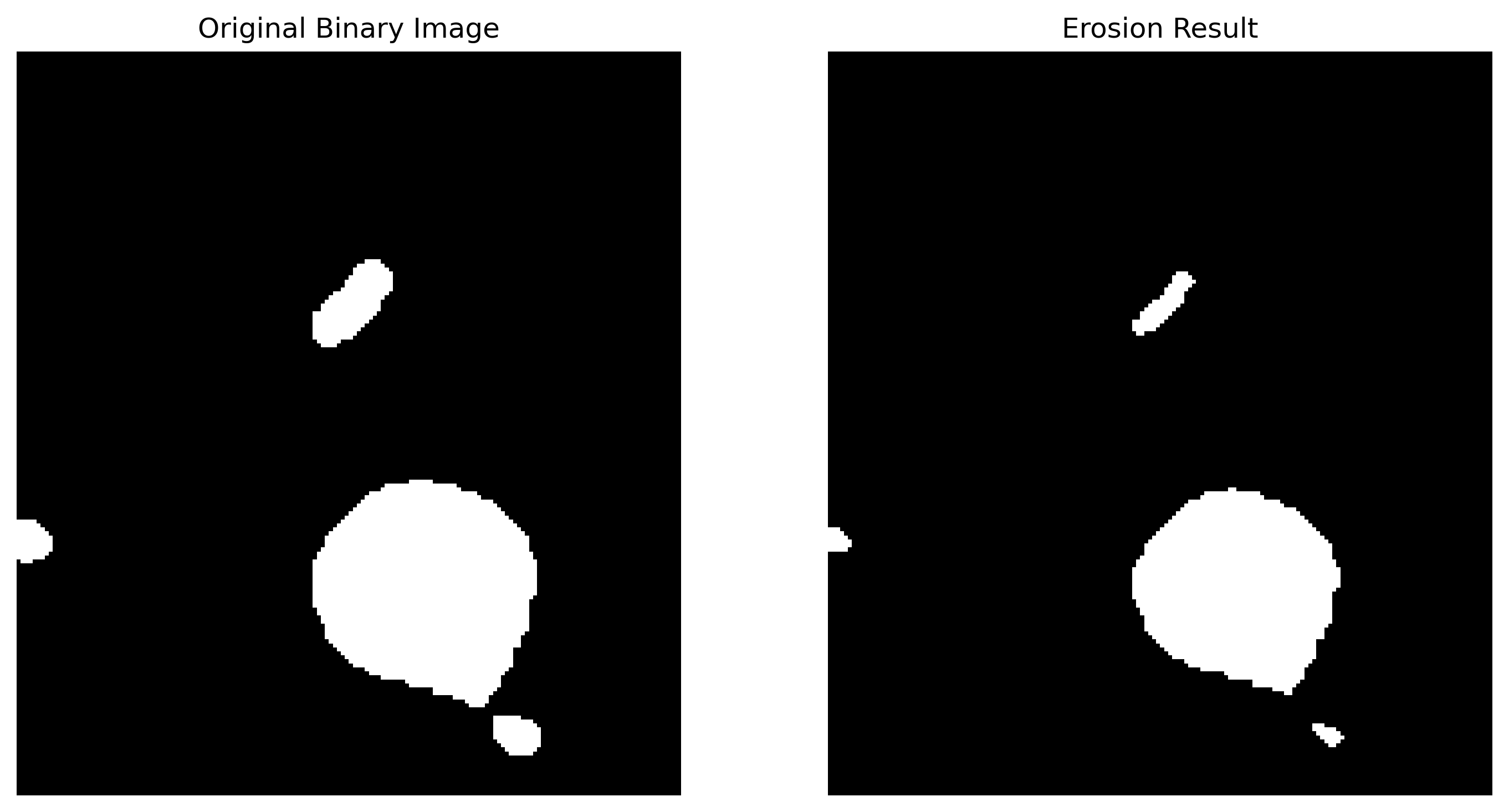
Erosion removes pixels from the boundaries of foreground objects, causing them to shrink.
It can be used to remove small noise, separate objects connected by thin regions, and refine object boundaries
Example: Removing small unwanted regions from a segmentation mask.
Dilation
!comparison_dilation.png
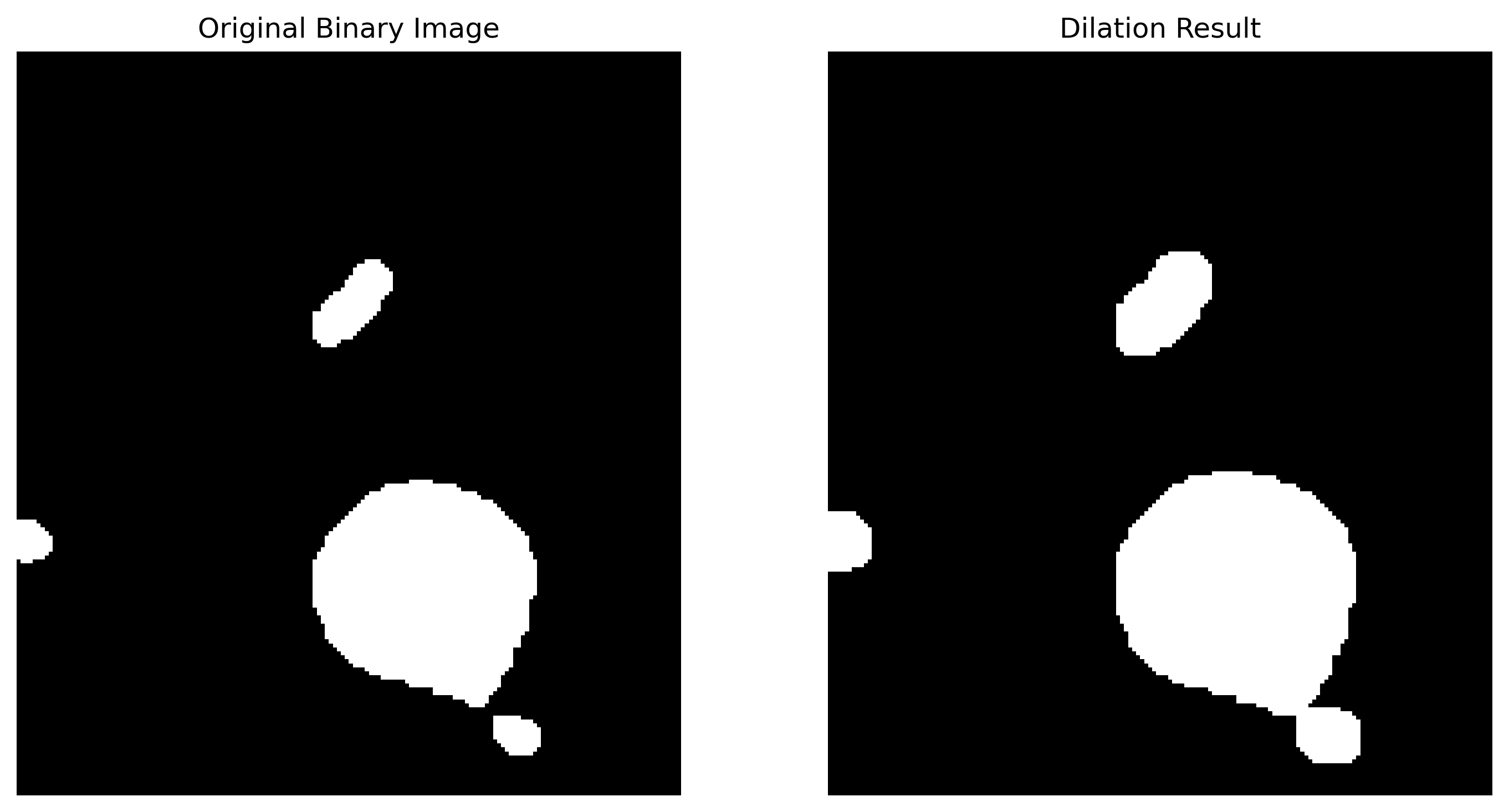
Dilation adds pixels to the boundaries of foreground objects, causing them to expand.
It can be used to fill small gaps, connect nearby regions, and strengthen thin or broken structures
Example: Connecting fragmented regions in a segmentation mask.
Opening
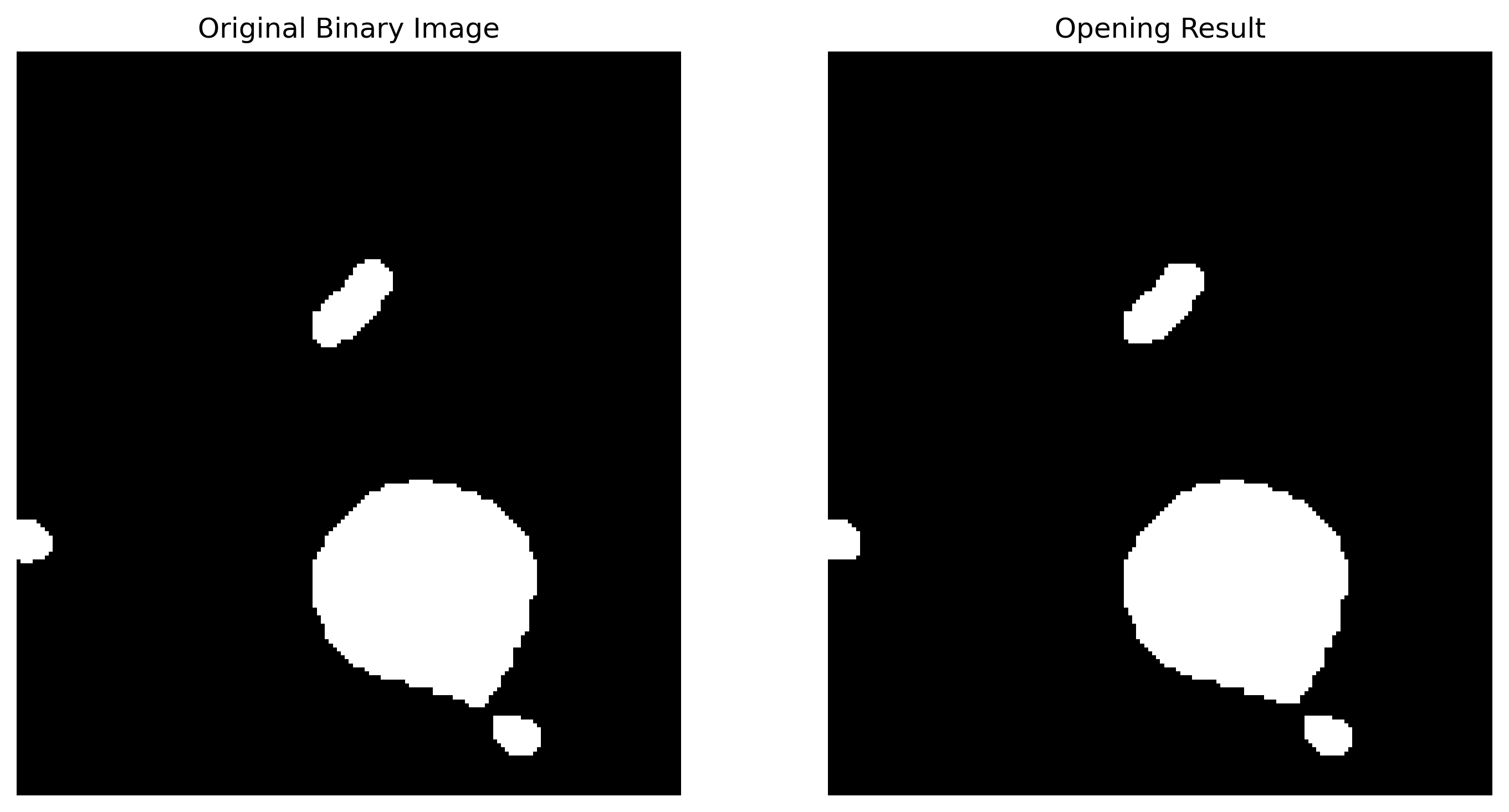
Opening combines erosion followed by dilation.
Opening = Erosion → Dilation
It is mainly used to remove small objects or noise while preserving the general shape of larger objects.
Example: Removing isolated pixels or small regions from a segmentation result.
Closing
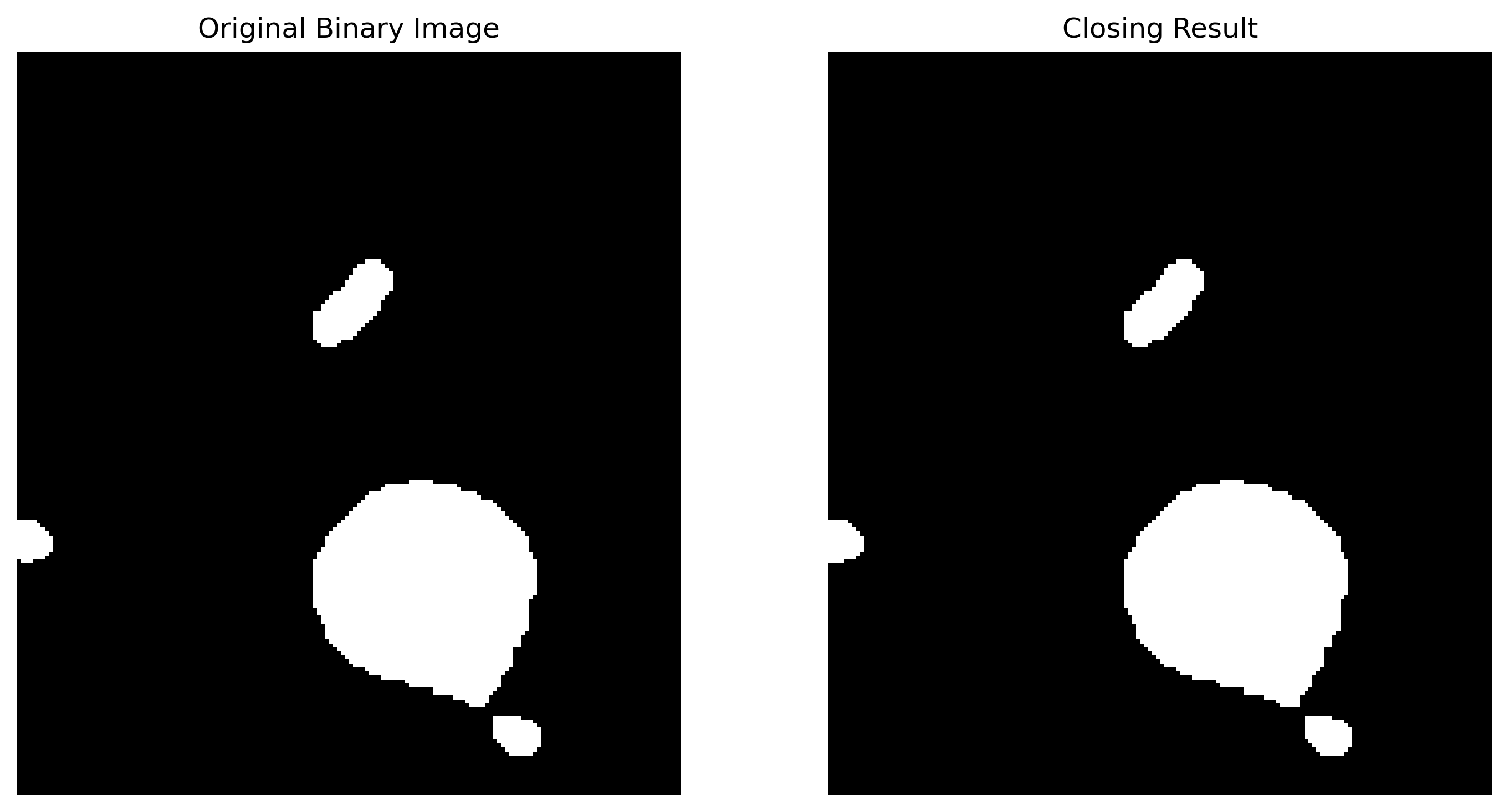
Closing combines dilation followed by erosion.
Closing = Dilation → Erosion
It is mainly used to fill small holes and close gaps within objects while preserving their overall structure.
Example: Connecting broken sections of an object in a segmentation mask.
Other Morphological Operations
Other operations can be created by combining morphological techniques or applying them in different ways.
- Hit-or-Miss: Detects specific patterns or shapes in binary images.
- Morphological Gradient: Highlights object boundaries by calculating the difference between dilation and erosion.
- Top-Hat Transform: Extracts small features or details from an image.
- Skeletonisation: Reduces objects to their essential skeletal structure while preserving connectivity.
- Pruning: Removes small unwanted branches from a skeleton.
Applications
Morphological operations are used in many areas of image processing and computer vision, including:
- Medical image analysis such as cleaning and refining tumour or tissue segmentation.
- Optical character recognition by removing artefacts and improving text structure.
- Object detection and segmentation to refine predicted objects and remove noise.
- Industrial inspection by identifying and refining defects such as cracks, scratches, and holes.
- Fingerprint recognition by enhancing ridge patterns and removing noise.
- Satellite image analysis by refining the detection of buildings, roads, vegetation, water bodies, and other structures.
Advantages
Some advantages of morphological operations include:
- Computationally efficient
- Removes small unwanted objects and artefacts
- Fills small gaps and holes
- Produces cleaner object boundaries
- Helps refine segmentation masks
- Highlights important shapes and structural features
- Can be easily incorporated into image-processing and AI workflows
How Morphological Operations Can Support AI Models
Morphological operations can support AI models at different stages of an image-processing workflow:
-
Preprocessing: Morphological operations can clean and prepare images before training by removing noise, filling small gaps, and refining important structures. This gives the model cleaner and more consistent input data.
-
Data Augmentation: Operations such as erosion and dilation can create variations of existing images by slightly changing the size and shape of objects. These variations can increase the diversity of training data and help models generalise better to different conditions.
-
Feature Enhancement: Morphological operations can highlight important features such as edges, boundaries, thin structures, and small objects. This can make relevant patterns more distinct and easier for an AI model to learn.
-
Post-processing: After a model produces a prediction, morphological operations can clean and refine the output by removing small unwanted regions, filling gaps, and smoothing boundaries. This can produce more coherent and usable segmentation masks.
Conclusion
Morphological operations provide a simple way to work with the shape and structure of objects in an image. From the basic operations of erosion and dilation, we can perform more advanced operations such as opening, closing, skeletonisation, and morphological gradients. When applied to segmentation results, these techniques can help remove unwanted artefacts, close small gaps, and produce cleaner masks. The effectiveness of the operation depends largely on the type and size of the structuring element and the characteristics of the image being processed. Sometimes, getting a cleaner segmentation result is not only about building a more complex model. A little post-processing can also go a long way.